Tower R.N.L.I.

In need of a new home…

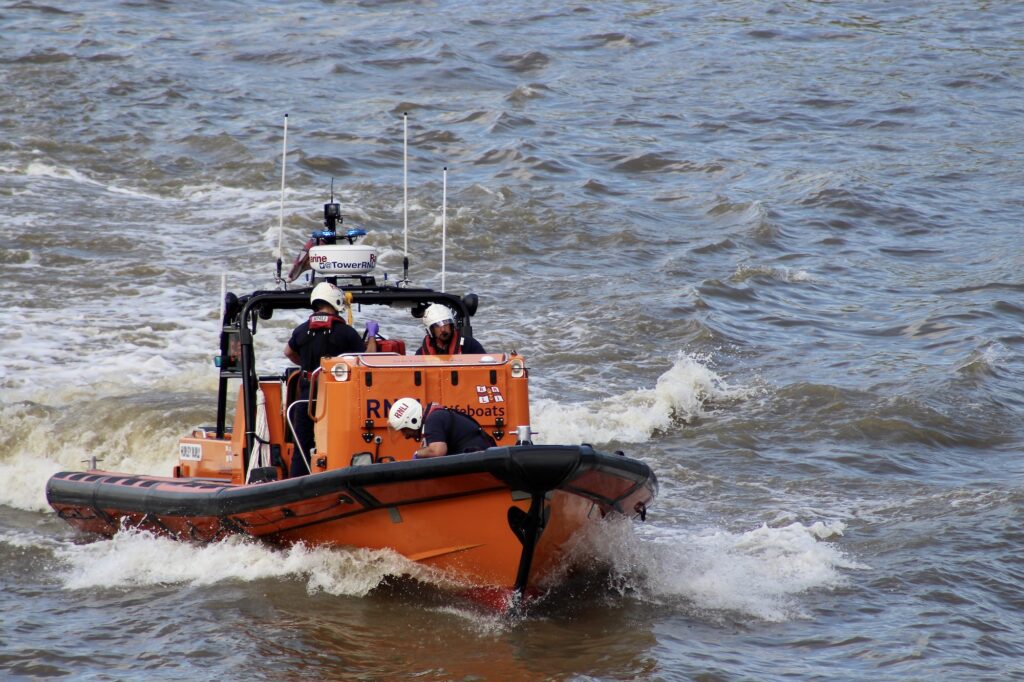
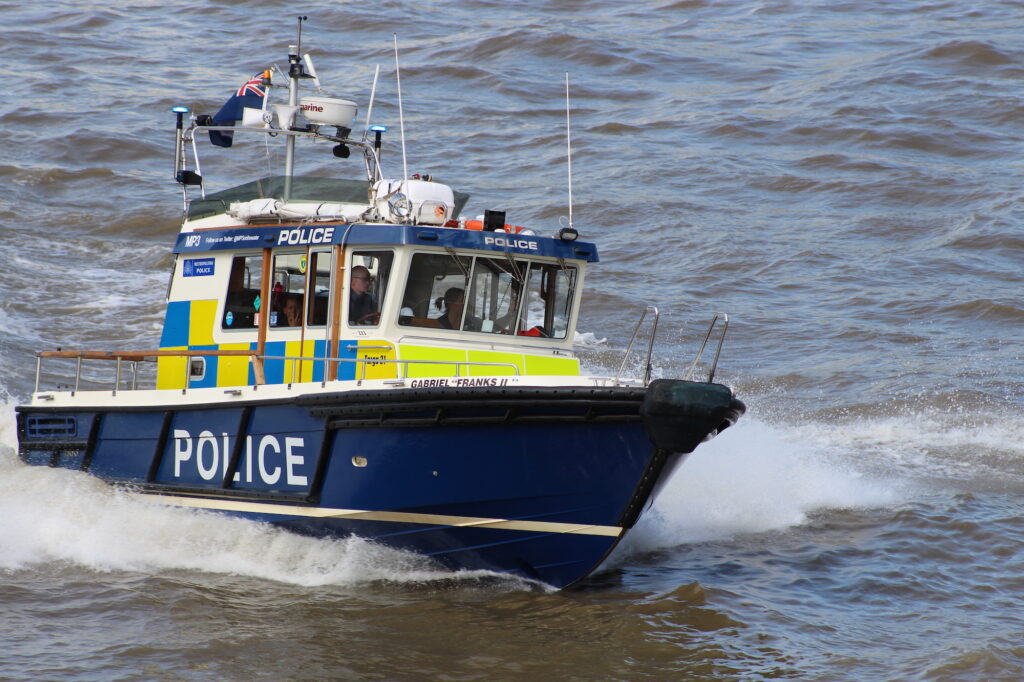
Night and day, throughout the year, the permanent and volunteer RNLI crews at Tower Lifeboat Station, afloat on the central London tidal Thames, are ready to come to the rescue of anyone in trouble on the river. Since opening on January 2nd in 2002, they have had nearly nine thousand call-outs for various emergencies, and their intervention has actually saved 346 lives so far. Covering the river between Battersea and Barking Creek, they liaise, and often work closely with the Metropolitan Police Marine Policing Unit; the London Fire Brigade’s Lambeth fire boats; the London Port Authority; and the other three RNLI lifeboat stations watching over the Thames from Teddington, Chiswick, and Gravesend. They also work closely with the London Ambulance Service, who are on hand to take over care of casualties.
Tower Lifeboat Station is the busiest in the UK. There are ten full time crew members and fifty-five volunteers, each serving at least two twelve-hour shifts a month, ensuring that the station is always manned and the lifeboat ready to launch within ninety seconds of a call.
However, now their floating accommodation has more or less come to the end of its useful life and is in urgent need of replacement. The building rises and falls about seven metres with each tide, and passing boats cause it to bang, clang and crunch against the river wall, so that the damage inflicted over the years is now beyond repair. Added to that, the accommodation is cramped and crews are unable to rest properly during long shifts. They also need more room to attend to casualties in a private space before their transfer to an ambulance to take them on to hospital.

A Little History
Rob Jeffries, curator of the Thames River Police Museum at Wapping, and ex-member of the River Police, has kindly given me some historical background to this landmark structure on the Thames and how it came to be the home of the Tower RNLI Lifeboat, having served before as a Police Station.
The Thames Marine Police Force became an official, government funded body in 1800 and were based on the riverside at Wapping. However they eventually needed more cover for their extra duties and “in 1817 the Marine Police acquired a couple of ex-Royal Navy vessels, taking the ‘hulks’ and converting them into floating Police Stations, one at Blackwall and one closer to Westminster.”
In 1870 the Thames Division took control of a pier close to Somerset House, owned by the Thames Conservancy, which had been a landing stage for steamboat passengers. With a large sign saying Thames Police Station, it was known as Waterloo Pier, before eventually becoming the present home of the Tower RNLI Lifeboat Station. Rob tells me “the living quarters were at the down river end of the pier, and included the home of Chief Inspectors when in charge of the station, and their families. I remember, I was on duty one day when an elderly lady arrived and asked if she could see the rooms where she was raised as the young daughter of a former Chief Inspector on Thames Division.”

The old steam launch is CHOWKIDAR, a Hindi word for Night Watchman. ©Archives of the Thames River Police Museum

Having heard from someone about floral displays on the pier, I asked Rob about this to which he replied that he didn’t know “how, why, or when the tradition started but the Met. Police used to have a Gardens Competition. It seems that in order to encourage other stations to partake, a Flower Pot or Window Box section was added to the categories, and at one time the Waterloo Pier used to enter in that section and, by all accounts, used to do quite well.”

A fine floral display for the Met. Police’s Garden Competition on The Pier. ©Archives of the Thames River Police Museum
The Waterloo Pier being towed downstream for a survey, possibly in the 50s: a complicated procedure, involving disconnections from all the usual services, so not often undertaken. ©Archives of the Thames River Police Museum

Rob continues: “In the years following the Marchioness Disaster of August 20th, 1989, there were increased calls for a dedicated search and rescue service on the Thames in Central London.” Up until then it had been the river police who carried out rescue and recovery missions as just one part of their duties. Finally the RNLI was asked by the UK Government to provide a dedicated lifeboat cover along the tidal Thames. They were originally based at Tower Pier next to the Tower of London but they had to share the pier and its facilities with a number of others. When Waterloo Pier ceased operation as a Police Station, it began to deteriorate and as the RNLI were in need of their own space, they were able to take it over for a nominal price of £1.00. Rob explains: “A representative from the RNLI duly handed over a £1.00 coin to an inspector of the Marine Support Unit on the agreed handover date and the Inspector promptly handed the coin back as a ‘Donation’ to the RNLI charity.”
Though the Pier only cost the RNLI £1.00, they had to fund the sizeable cost of refurbishment, much of which came in donations. And, though having moved to below Waterloo Bridge, it was decided to keep their already established name of ‘Tower RNLI’ to avoid confusion, and to call their pier ‘Lifeboat Pier’.
Floating Police Station by artist Mackenzie Moulton in 1983. ©Mackenzie Moulton

The Waterloo Pier as a Police Station, in the picture above, was painted by Mackenzie Moulton in 1983 for Sergeant David Noall, one of his friends working with him for the Thames Police Force. He tells me that “the green launch on the right, was nick-named, the Green Parrot, but it was officially the Commissioners’ launch, used by senior officers visiting Thames Police Stations.” Joining the Met. at 19, his last thirteen years of service were spent in the Underwater Search Unit based at Wapping, London, a difficult, dangerous, and often distressing job, including the harrowing search for victims of the Marchioness disaster in 1989. He painted throughout his career in the Police, perhaps as an escape from some of the horrific sights he came across as police diver, and has been a successful artist for sixty years. Four of his paintings now hang in the Thames River Police Museum.
Appeal for the future
Whether you’re a riverside worker, or dweller, a Londoner, or visitor, you might one day have need of rescue along the central London Thames but even if not, your support for the Appeal (see link below) will mean that others will have the benefit of a swift and professional rescue.
“The target is £33,000 and this, along with other generous donations, will fund the £8.2 million (correct as of 5 August 2021) project to commission, prepare, and build the new RNLI Tower Lifeboat Station. Any funds raised over the full cost of the project will be used to fund other lifesaving activity. If not enough money is raised then general funds will be used for the balance of the project.”
The present Tower Lifeboat Station structure, though only twenty years in operation as part of the RNLI is in fact, as you have seen from its history, over 150 years old and beyond repair. A new station is needed with some urgency.
As mentioned above, Tower Lifeboat Station covers the sixteen miles between Battersea and Barking Creek and the demands on crews along this dangerous stretch of the river are extensive. They have to contend with the constant changing levels of the tides, which rise and fall as much as seven metres, and a tidal flow of more than five miles an hour, which means that they have to be aware of, and deal with, the way in which currents flow through the many bridges, piers, fixed obstacles along their sector, and numerous floating hazards.
Tower Lifeboat crews have attended to casualties on both leisure and commercial boats as well as casualties injured on some of the construction sites along the river. They are well-prepared and trained, and have carried out joint exercises with Thames Clippers and Cory tugs among others. They also frequently speed to the rescue of smaller craft such as motorboats, canoes, rowing boats and dinghies as well as people, cut off by the tide or, who by accident or design, find themselves in the cold waters of the river, where the average temperature is 12 degrees centigrade and survival can be as little as fifteen to twenty minutes. Their shouts are always a race against time.
Many voices from across London and beyond, have joined in to appeal for help in funding a new Tower Lifeboat Station, which will include much-needed modern facilities such as private, purpose-built spaces for casualty care, a drying room for kit, up-to-date equipment, more comfortable accommodation for the crews, and a new area for public engagement.

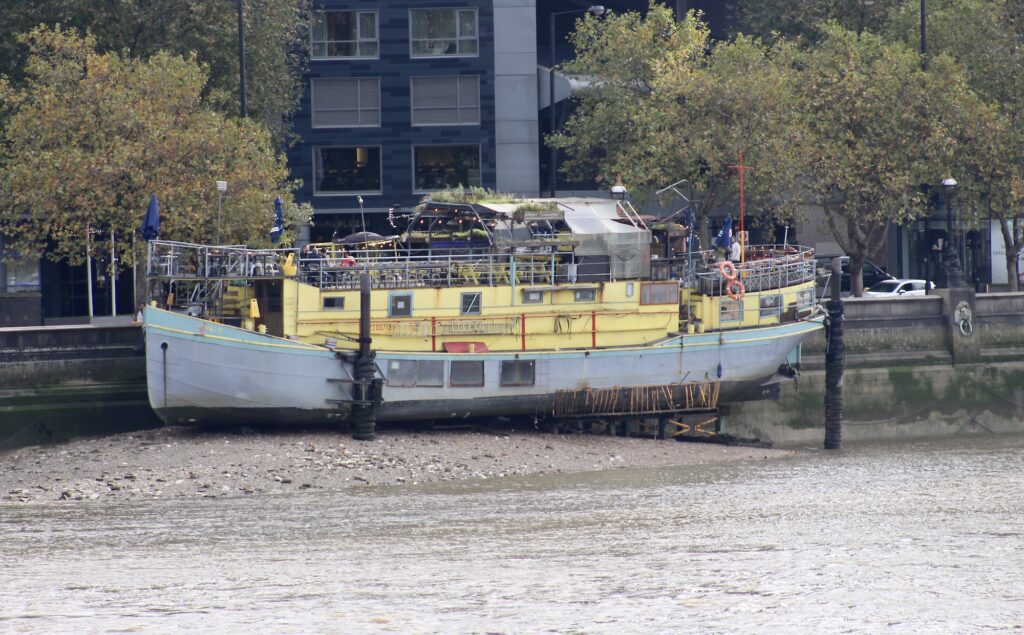
The present Tower Lifeboat Station ©Patricia Stoughton
“Saving lives on the Thames.” It’s what they do. ©Patricia Stoughton
Tower E-class lifeboat HEARN MEDICINE CHEST on the River Thames. Crew in Helly Hansen kit. Crew members Hannah Liptrot, Craig Burn, Al Kassim and Jai Gudgeon. ©Laura Lewis
Holly McGlinchey, volunteer crew member at Tower lifeboat station. Pictured in full Helly Hansen ALB kit. ©Nathan Williams RNLI

Holly McGlinchey adds her voice to the Appeal: “Now that I’m on crew, I love being part of the team and am so proud of the vital work that we do. But we need to carry on doing our lifesaving work in a station that is fit for the future. Our current station is old, cramped and lacks the proper facilities that we need. Please donate to our appeal so that we can have the station we deserve.”
See here how Holly helped save a life and became inspired to volunteer for the RNLI. She is now a valued member of the Tower Lifeboat crew.

The latest Tower E-class lifeboat HEARN MEDICINE CHEST training on the River Thames near Battersea. The three crew on board are wearing face masks as part of the PPE worn during the coronavirus COVID-19 crisis. ©Stephen Duncombe
A Tower Lifeboat crew attending to a casualty in Hurley Burly, before his transfer to a London Ambulance, June 22, 2019
©Patricia Stoughton

To help build the new Tower Lifeboat Station please click donate and, as full-time crew member Chris Walker says:
“Be part of an enduring legacy that will make the Thames a safer place for everyone now and for years to come.”

Sources and further information:
Artist Mackenzie Moulton and ex-police diver
Appeal for Tower Lifeboat Station
British History Online
Rob Jeffries curator of the Thames River Police Museum
Chris Walker, helm at RNLI Tower Station
Meet three members of the Tower Volunteer Crew
Further details on the Appeal for a new Tower Lifeboat Station

Victoria Tower Gardens- update

A cherished Thames-side park in central London at risk

Since first posting this article in September, 2019, the government has given the go-ahead for a Holocaust Memorial and underground learning centre right by the river Thames. However, rather than a memorial to the Holocaust, blending in with those already existing in the park, the design chosen is an ugly, domineering, over-development of the space, much criticised by architects, and many others.

For those who know and love the gardens, and for those who care about our London riverside heritage, here is a re-post of the article to remind you of what we have been fighting for and what we all stand to lose.

**************************************

Perhaps not many of you will know this park by name, though you might have passed it along the river, or sought refuge there after a visit to Parliament Square and the Palace of Westminster, but you will have undoubtedly seen it as the backcloth to countless news reports over the years and particularly at this time.

The elegant shady plane trees lining the embankment wall of Victoria Tower Gardens

With its uncluttered central green space bordered by mature London plane trees, the atmosphere is relaxed. A recently upgraded children’s playground, a small kiosk serving coffee and snacks, and several benches along the side overlooking the Thames all add to this feeling. A park for all seasons, managed by London’s Royal Parks it is freely accessible to visitors, locals, and workers alike.

Office workers, visitors and local people relaxing on a summer’s day
A perfect park for dogs and their community of owners too

Together, Victoria Tower Gardens and Victoria Gardens South, cut by the approach to Lambeth Bridge, narrow progressively like a shard from their border with the Palace of Westminster, to a gate leading onto Millbank.

The site of Victoria Tower Gardens in 1865 with wharves and industrial buildings next to the Houses of Parliament, by William Strudwick 1834-1910

Part of the gardens was first created in 1879 during the construction and installation of a proper sewage system designed for London by the Chief Engineer of the Metropolitan Board of Works, Joseph Bazalgette. He was brought in after the renowned “Great Stink” in 1858, which made London, and particularly the Houses of Parliament, thoroughly unpleasant and virtually impossible to do business in.

The substantial works, land reclamation and the building of the Thames Embankment, meant that the long-established riverside wharves and warehouses, represented in so many works of art, were dismantled between 1880 and the early 1900s.

The riverside plane trees lining Victoria Tower Gardens in their autumn glory

The Ordnance Survey map of 1872 covering the site, marks the Police Lodge; a path leading to a side entrance to the House of Lord; a small planted area; and an empty space next to Abingdon Wharf, the most northerly of several wharves, including coal and stone wharves, an oil factory, cement works and flour mills. You can see remnants of this industrial and commercial past on the foreshore at low tide.

Looking through the autumn trees towards Lambeth Bridge in the southern section of Victoria Tower Gardens

By 1894 the O.S. map names Victoria Tower Gardens for the first time, and depicts them roughly as a square separated from the space adjacent to the House of Lords. Planted with trees, with an outside path, a circular path in the centre and one leading to Great College Street, the gardens are clearly established. Some of the wharves, though not named, are still in place at the southern end right up to Lambeth Bridge. The flour mills and cement works are still present and there is a new pumping station. In 1900, the London County Council (Improvements) Act, Section 8, states that the southern part of Victoria Tower Gardens “shall be laid out and maintained…for use as a garden open to the public and as an integral part of the existing Victoria Tower Garden”.

The southern part of Victoria Tower Gardens on a sunny winter’s day, with a view across to Lambeth Bridge

The 1914 O.S. map, not published until 1935, shows how the gardens were extended to their present layout with the trees planted as they remain today, bordering the park along Millbank and fringing the Thames Embankment.

A children’s playground was added in 1923, as a gift from local paper merchant Henry Spicer to provide “an exciting and safe area for children, especially those from poorer neighbourhoods.” Now named Horseferry Playground, after the old ferry that existed for many years roughly on the site of Lambeth Bridge, it has recently been imaginatively re-designed. Children enjoy the sandpit, water feature, swings, slide and dance chimes, which ring out surprisingly melodious tunes. A happy and much-used place.

Railings depicting riverside scenes, designed by Chris Campbell

Part of the playground and entrance to the public toilets is fenced off by Thames themed railings depicting familiar skylines by Chris Campbell. In the opposite corner you can buy drinks and pastries.

Snow in 2009 and the marvellous, uninterrupted view of the Palace of Westminster

There is a *temporary* Education Centre, next to the House of Lords, well-used by schools to teach their pupils about the workings of the Palace of Westminster. Unfortunately, though every effort was made to blend in the structure by planting some of the roof area, it cuts into the fine perspective of the House of Lords from the south and disrupts the view of Rodin’s Burghers of Calais against the Gothic architecture. Hopefully it will be dismantled as planned, when the massive task of renovating the parliamentary buildings is completed.

The Buxton Memorial, created in 1866 to commemorate the Abolition of Slavery

The gardens are home to three fine memorials. The oldest is the Buxton Memorial, made in 1866 to commemorate the Abolition of Slavery. Commissioned by Charles Buxton MP, it is dedicated to his father Thomas Buxton and others, who were actively involved in the abolition of slavery. It originally stood in Parliament Square, was moved during alterations to the Square in 1949, and installed in Victoria Rower Gardens in 1957. It is much treasured by Britain’s Afro-Caribbean community.

The Burghers of Calais by Rodin

In 1911, Rodin’s The Burghers of Calais, one of the four casts of his original 1889 sculpture, was bought by the National Art Collections Fund (now the Art Fund) and installed in Victoria Tower Gardens in 1914.

The statue of Emmeline Pankhurst standing next to the Houses of Parliament, reminding visitors of her struggle to win the vote for women

The third of the three memorials in the gardens is a fine statue of Emmeline Pankhurst sculpted by A.G. Walker in 1939. To begin with it was installed towards the middle of the green but moved in 1956 to an even more appropriate position close to the House of Lords. Her tireless struggle to win the vote for women remains a source of inspiration to right-minded people everywhere. You can often see discreet tributes in the suffragette colours of purple, white and green at her feet. Recent attempts to have her statue removed to the grounds of a private university in Regent’s Park met with a storm of protest and her statue, having now been awarded Grade II* listed status, will remain where it is.

The benches along the Embankment wall, a perfect place to relax and to watch river traffic

Another of attractions of Victoria Tower Gardens is its peaceful, uninterrupted views of the Thames facing Lambeth Palace and St. Thomas’ Hospital, with Westminster Bridge to the left and Lambeth Bridge to the right. Here is a calm place to watch the ebb and flow of the tide and all kinds of river traffic.

Plaque commemorating Sir Thomas Peirson Frank fixed to the repair he made to the Victoria Tower Embankment wall

During the Second World War, a breach in the embankment wall here during a Nazi bombing raid, was swiftly sealed as the operation of a well-organised plan by Sir Thomas Peirson Frank went into action. He is commemorated on a plaque set above the repair which notes that he “saved London from drowning.”

The gardens have also been host to a number of one-off, historic and other artistic events. The most poignant of these, photographed by Getty Images on a bleak January day in 1965, was the long, winding queue of people patiently waiting to pay their respects to Winston Churchill at his lying in state in Westminster Hall.

Spectra shone a powerful beam of light into the sky

And one of the most spectacular artistic events took place in early August 2014. Spectra, a powerful beam of light devised by Japanese light artist Ryoji Ikeda, was projected into the sky to mark the centenary of the outbreak of the First World War. It was visible for miles across and around London.

One of the elephants from ‘The Elephants’ Parade’, London 2010: a warning of their vulnerability to extinction

But the gardens do not just look into the past. In 2010 two decorated elephants from the London-wide ‘Elephant Parade’ were installed there as part of the conservation appeal to highlight the plight of elephants and the urgent need to protect them.

Screen and equipment set up in readiness for a Luna Cinema screening

And this year, as before, Victoria Tower Gardens hosted the open air Luna Cinema, with three nights of classic cinema under the stars. A magical experience.

The setting for many serious political interviews over the years along with College Green on the other side of the road, the gardens have until now been used by MPs when they’re in a more relaxed mode. One popular annual event, sadly cancelled this year, used to take place on Shrove Tuesday, when in aid of charity, teams of MPs, Lords and journalists raced each other around a track while flipping pancakes.

The gardens are always popular in the sunshine at any time of the year

Now their future is seriously under threat and rather than a solemn and fitting memorial to the Holocaust blending in with the existing memorials, a massive, ugly structure, described by some as “a giant toast rack”, together with a substantial underground learning centre, are proposed that would dominate the park and change its character for ever. The architect Sir David Adjaye said “Disrupting the pleasure of being in a park is key to the thinking.” Times 2, 4.2.19 Needless to say, this insensitivity has sparked a fierce controversy which you can explore by clicking on the links below.

In the heart of central London, this small, green, pennant-shaped garden, with its elegant, shady plane trees and lovely views of the Thames is also with its low-key yet powerful memorials, a discreet salute to humanity, courage and liberty. It is for different reasons a precious shared space for many. Let us hope that it will remain so. The fight continues so please visit the links below and help if you can.

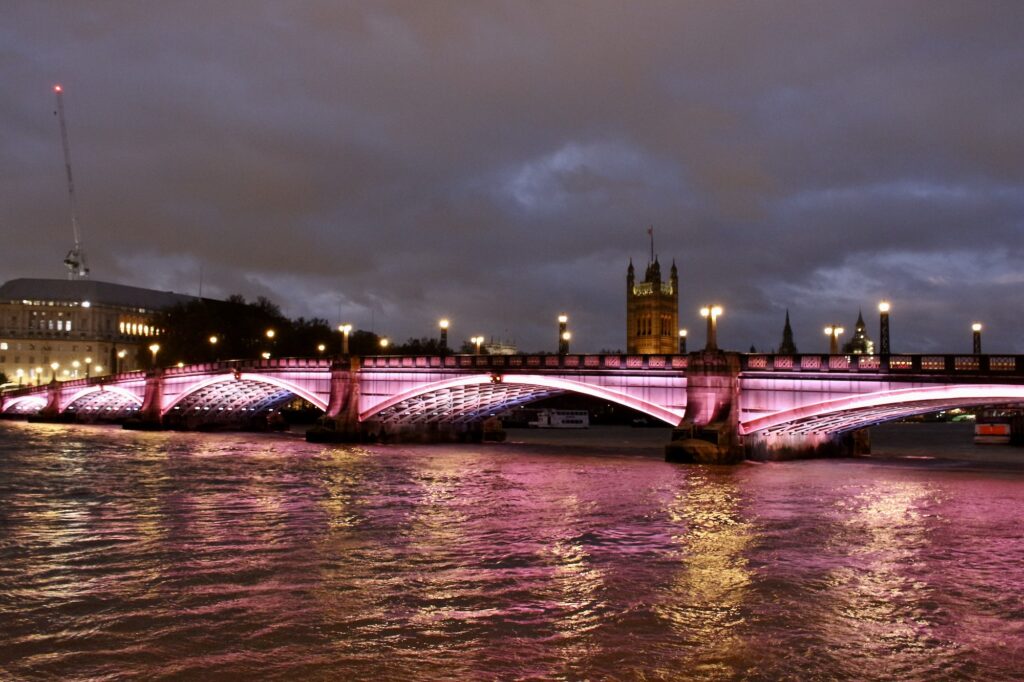
Nightfall on the Thames at Lambeth Bridge seen from Victoria Tower Gardens

Further Information
Save Victoria Tower Gardens
@SaveVTG
See The Gardens Trust