Another look, with a few notes, at some of central London’s Thames statues and sculptures: some firm fixtures, others on fleeting visits…
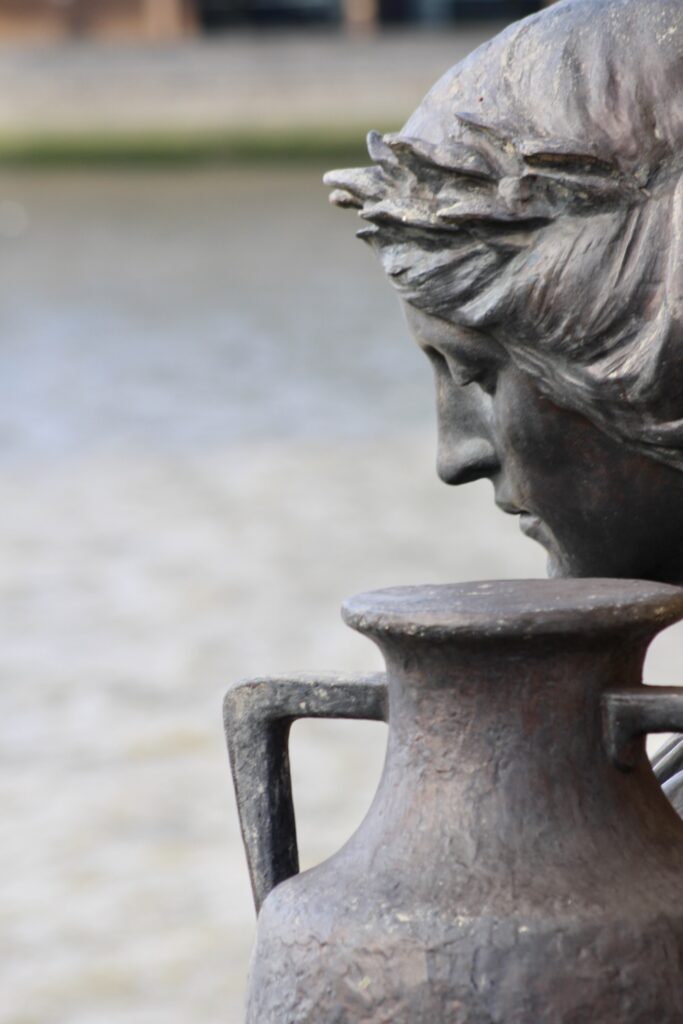
Pottery, one of the upstream statues on Vauxhall Bridge was sculpted by Frederick W. Pomeroy, RA (1856 – 1924), a leading sculptor in the New Sculpture movement. John Mackie writes in Lyon & Turnbull, that artists of the new movement reacted against “the late 19th century, stagnant sculptural scene of Victorian Britain”. Setting Pottery on Vauxhall Bridge was, and remains, an acknowledgment to the Lambeth Doulton Factory and Pottery studios, a little further downstream. Pottery’s thoughtful, reflective expression fits well with the “physical realism” which opposed the “frozen neoclassicism” existing at the time.
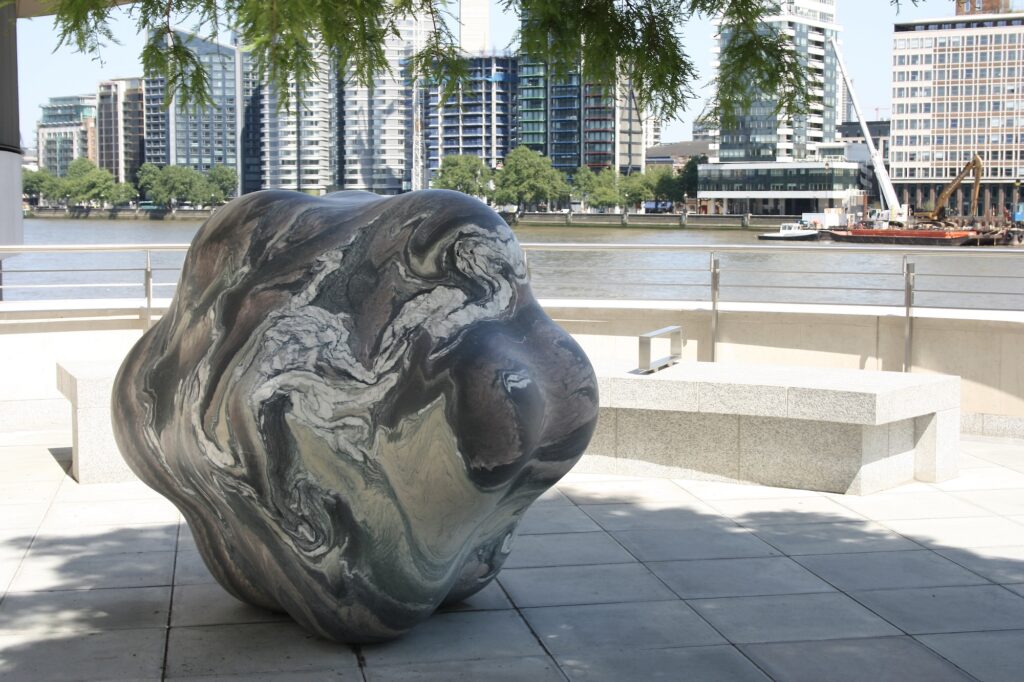
Created in 2014 by Peter Randall-Page RA, out of Rosso Luana marble, Shapes in the Clouds II is the second of a series five works to be seen elsewhere in the country. An article by Rupert Bickersteth in the Architects Journal describes how Randall-Page bought “much of the remaining stock of the Rosso Luana marble from the Tuscan province of Lucca” for future work, and gives an insight into Randall-Page’s relationship with this mysterious, almost fluid marble, when he quotes Michelangelo’s famous reflection that ‘the sculpture is already complete within the marble block, before I start my work. It is already there, I just have to chisel away the superfluous material.’ This amounts to a form of liberation.
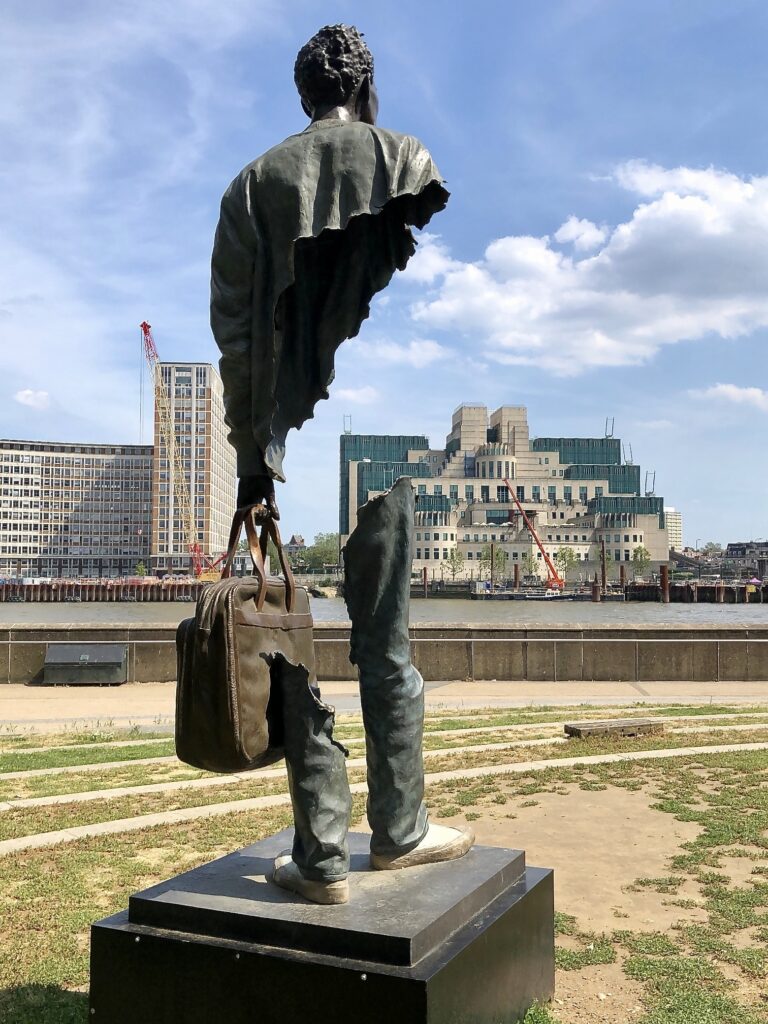
Standing in Riverside Walk Gardens by the Thames in 2023 for a short while, Khadine is just one of Bruno Catalano’s series of sculptures: Les Voyageurs. Carrying a bag, they represent “the experience of those who have faced change, separation, and new beginnings, suspended between what they leave behind and what they choose to preserve”, observes a Galleria Ravagnan article. You can visit Catalano’s studio here: Bruno Catalano. And there is something particularly poignant about the placing of Khadine in this spot by the River Thames, for it was from this site that prisoners from Millbank Penitentiary, chosen for deportation to Australia, began their journey to the un-known far side of the world.
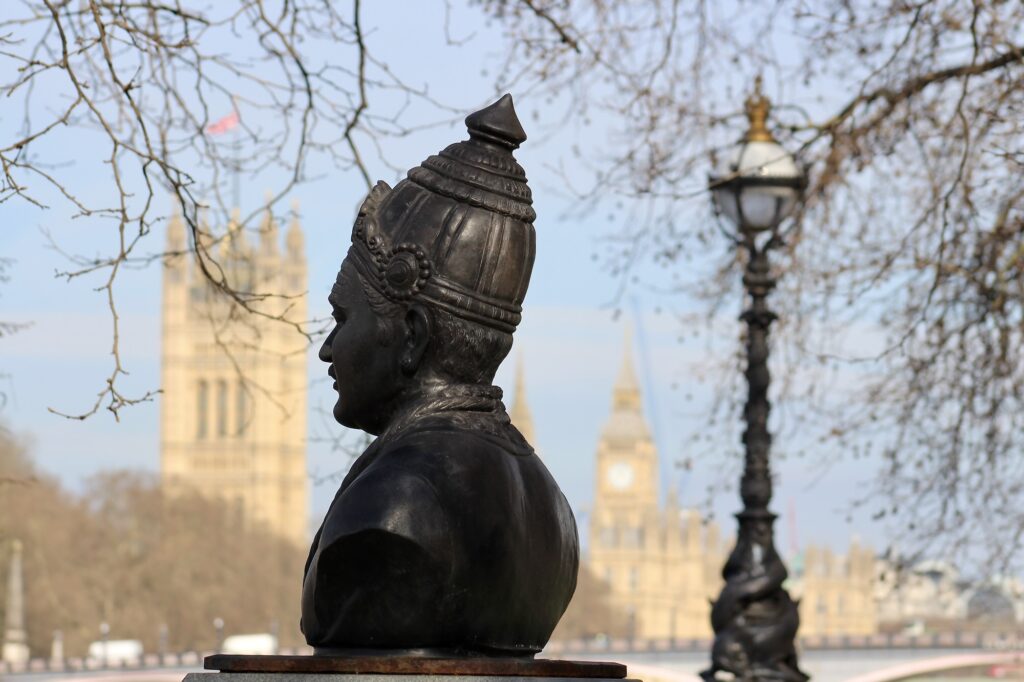
Standing on the Albert Embankment the bronze bust of Basaveshwara looks out over the River Thames and to the right, the Palace of Westminster. On the back of the plinth a plaque dedicated to this 12th-century Indian philosopher reads: “Basaveshwara, 1134 – 1168, pioneer of democracy and social reformer.”
It was sculpted by Sridhara Murthy K, a renowned artist from the Indian city of Shivamogga and erected with the support of The Basaveshwara Foundation, the Government of Karnataka, India, and Councillor Dr Neeraj Patil, Mayor of the London Borough of Lambeth, 2010-2011. It was unveiled by the Prime Minister of India, Shri Narendra Modi, on 14 Nov 2015 and from that time you can often see the bust adorned with garlands given by prominent visitors, “a traditional Indian mark of profound respect” and during Indian festivals such as Diwali. Lambeth Basaveshwara. There is too, a peaceful aura around this riverside figure.
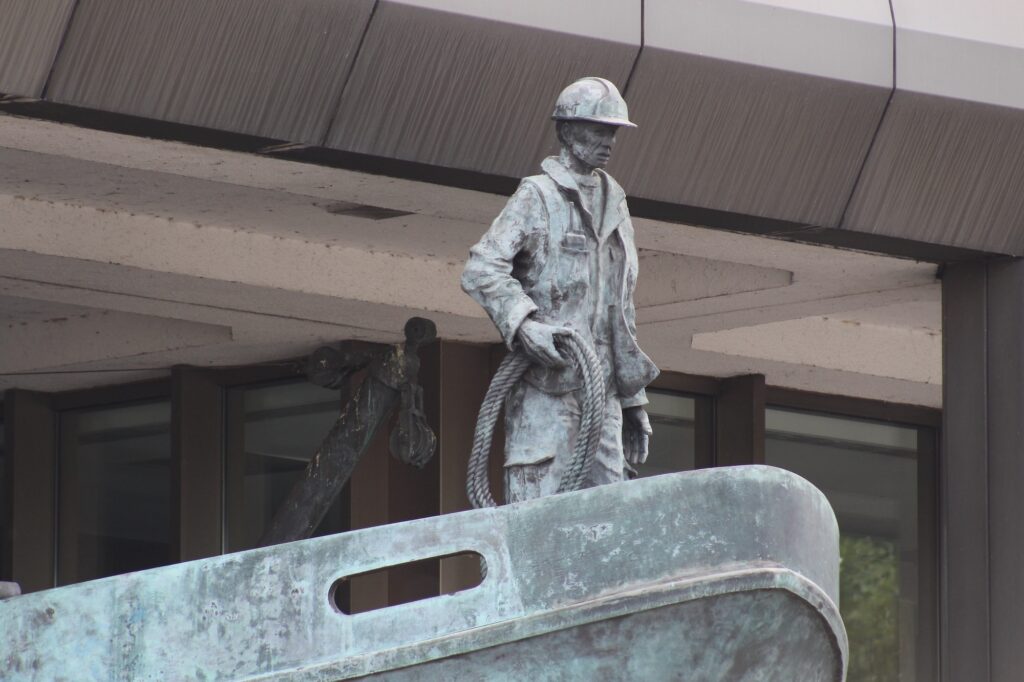
Impressive to see and appropriately sited on the Albert Embankment, the International Memorial to Seafarers, by sculptor Michael Sandle, stands outside the headquarters of The International Maritime Organization, the only branch of the United Nations to have its main offices in London. Michael Sandle created the winning design featuring a cargo ship. Quoted in an article on the IMO website, he explained “I have chosen a ship because it signals immediately and unmistakably what the Organization is about.” And he adds: “The crew member, the ‘seafarer’ standing on the prow, about to throw a line, is dressed as a contemporary marine operative because there are ships like this still in service.” The work was unveiled on September 27, 2001.
See: The Tidal Thames
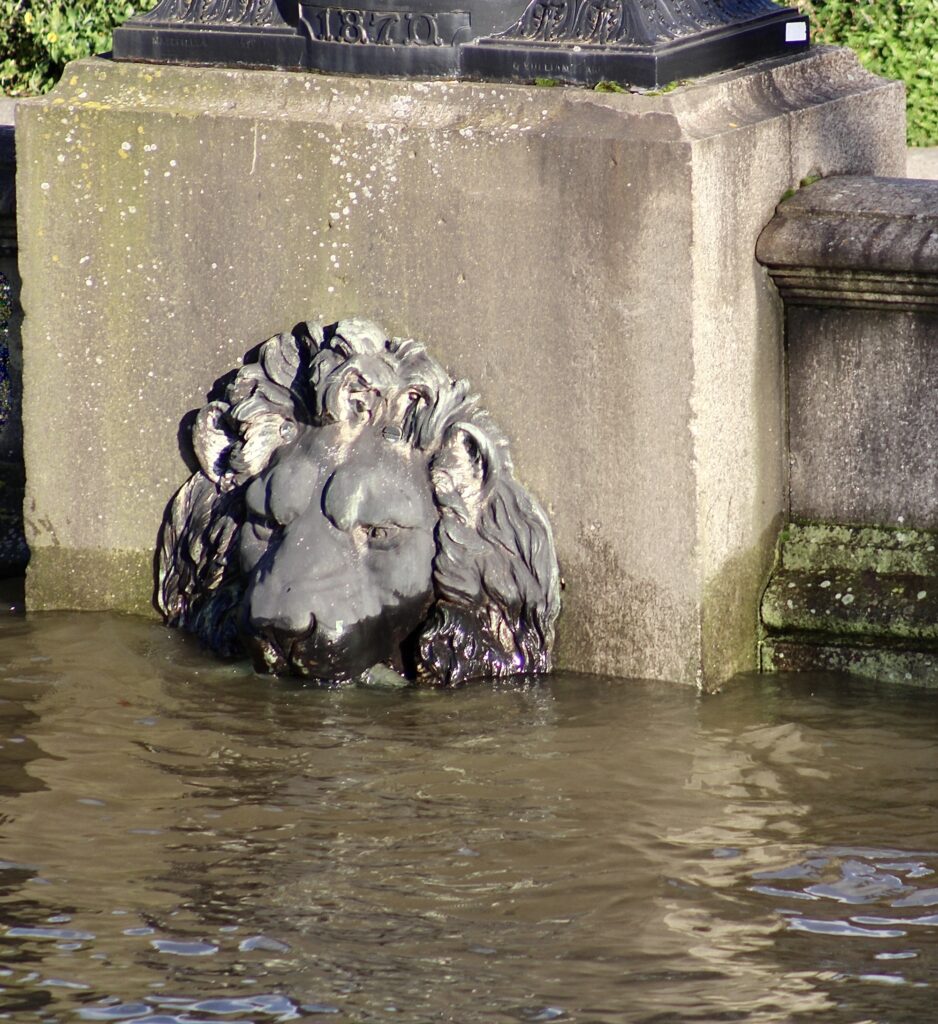
The bronze lions’ heads, each holding a mooring ring, were designed by sculptor Timothy Butler in 1870 as a decorative finishing touch to the embankment built by Joseph Bazalgette over his newly created London sewer. Built into the granite walls, they line stretches along both sides of the Thames Embankment in central London beneath Vulliamy’s famous *dolphin* lamps. This photograph shows the water covering both the mooring ring and the lion’s mouth, bringing to mind a much quoted saying “When the lions drink, London will sink…”. The “lions drink” only occasionally during particularly high spring tides now that central London is protected by the Thames Barrier, though to avoid overuse and strain on the Barrier, riverside roads – not properties – further upstream are allowed to flood at times.
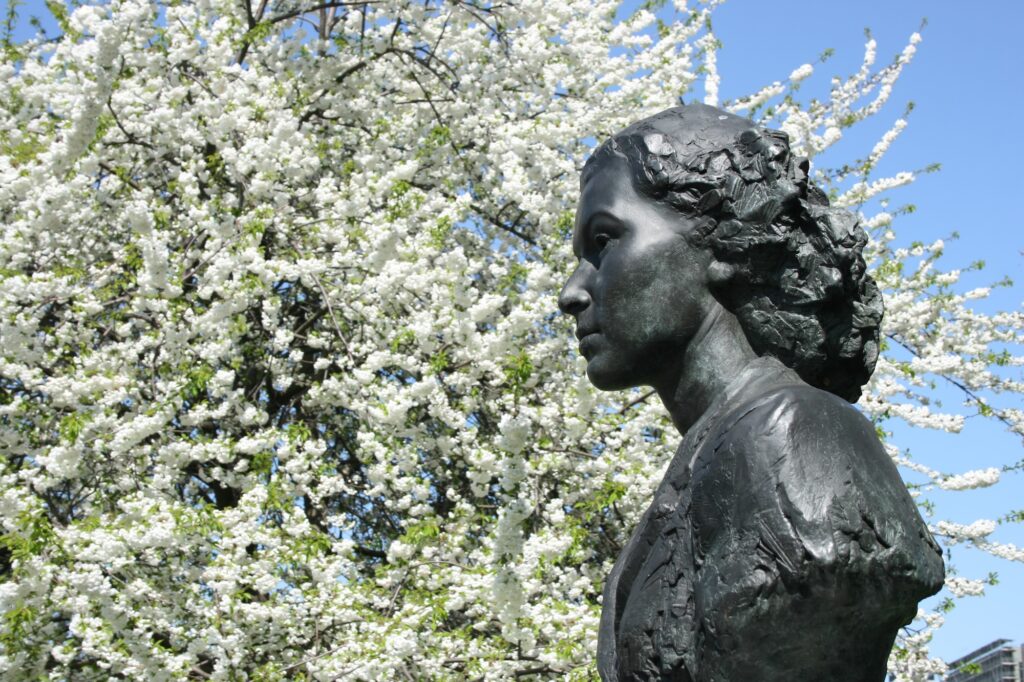
Set on the Albert Embankment, looking across the Thames to the Palace of Westminster, the bronze bust of Violette Szabo sculpted by Karen Newman, stands as a reminder of Szarbo’s exceptional courage in the Second World War for which she was awarded posthumously, both the George Cross and the Croix de Guerre. However, though her image was used for the bust, the memorial is for all S.O.E. (Special Operations Executive) agents. While serving in Churchill’s ‘Secret Army’, the members of the S.O.E. were led into extreme danger as, behind enemy lines, they worked to recruit agents of many nationalities “who should volunteer to continue the fight for freedom by performing acts of sabotage in countries occupied by the enemy…” The Monument is in honour “of those who did survive and those who did not survive their perilous missions. Their services were beyond the call of duty. In the pages of history their names are carved with pride.” And they are not forgotten: you will often see wreaths and flowers at the foot of the memorial. You can read the story of Violette Szabo in the Museum dedicated to her by clicking here.
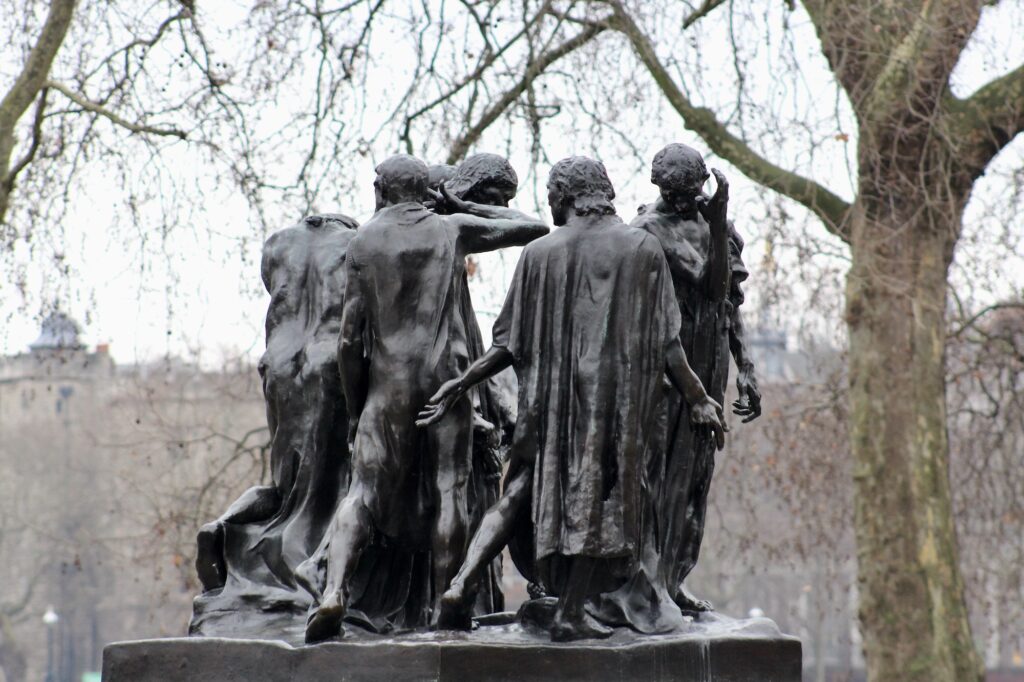
Sculpted in bronze, Rodin’s Burghers of Calais, standing in Victoria Tower Gardens next to the Palace of Westminster, is a powerful evocation of when in 1347, Edward III of England demanded that a group of Calais’s prominent citizens offer themselves as prisoners for execution in return for sparing the besieged population from starvation. They were: Jean d’Aire; Andrieu d’Andres; Jean de Fiennes; Eustache de Saint-Pierre, and bothers Jacques and Pierre de Wissant. Their lives were spared after Edward’s Queen, Philippa of Hainaut, pleaded for their lives to be saved.
“The people Rodin used as models were deliberately chosen from the Pas-de-Calais region. The different reactions of the figures, relating to the time leading up to their departure from the city, holding its keys and wearing the rope halters and shirts of the condemned, are indicated by their hugely expressive postures.” Art Fund.
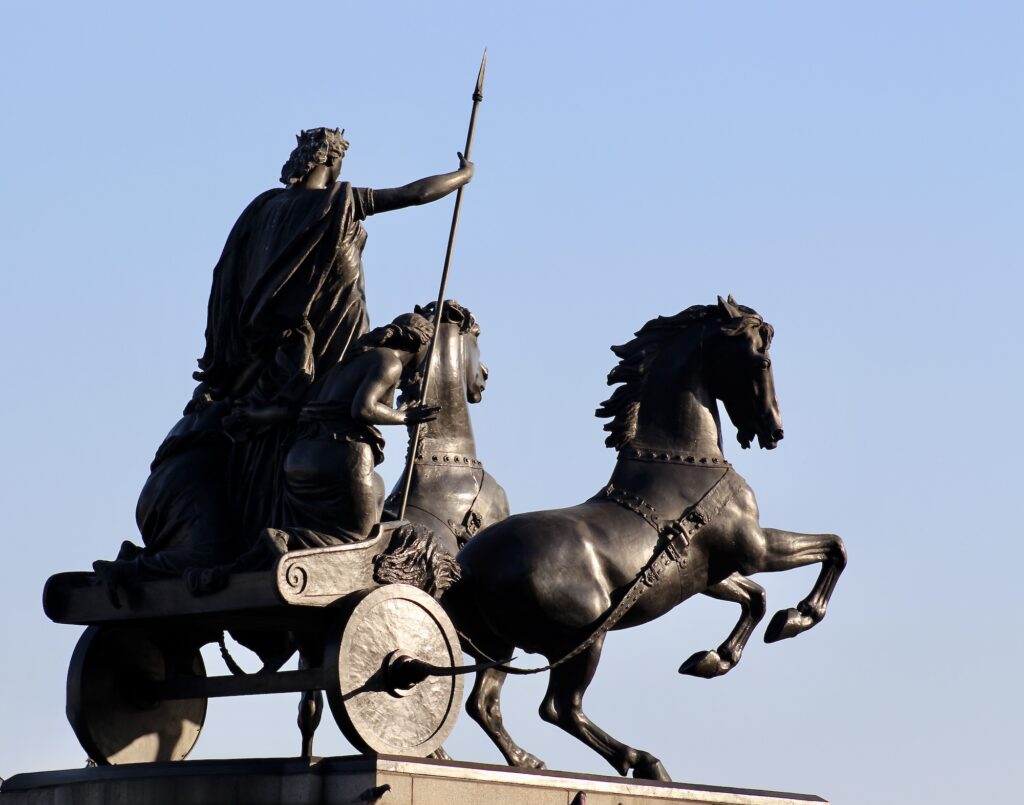
Fearsome, heroic Boudica, Queen of the Iceni tribe, (c. 60–61 AD) with her two daughters charging into battle against the Roman occupiers. Designed by Thomas Thornycroft between 1856 and 1885. The sculpture was first cast in plaster in 1871 and, after Thomas died in 1885, his son, sculptor Hamo Thornycroft, oversaw the casting in 1897.
The long time between conception and completion was partly due to the death of Prince Albert in 1861, who had commissioned the sculpture; problems with funding; and lengthy discussions about where it should be placed: ideas included Hyde Park Corner and Kensington Gardens. It was finally unveiled in 1902, without formal ceremony, in its present position at the western end of Westminster Bridge. Art Fund.
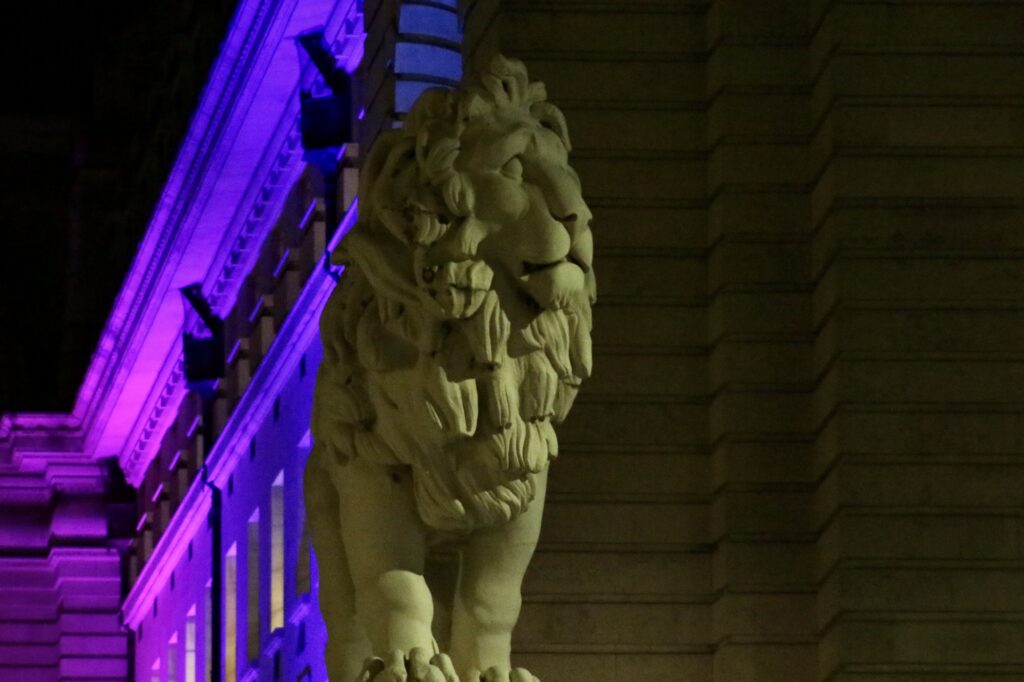
A favourite London riverside landmark, this reassuring, noble lion, was sculpted by William F. Woodington in Coade stone, a strong weather resistant artificial stone. From its creation in 1837, it survived both a fire at the Red Lion brewery where it began life, and the later devastation of the Blitz. After a spell outside Waterloo Station, where it served as one of the entrances to the Festival of Britain in 1951, it was finally moved to its site at the end of Westminster Bridge in 1966.
See its story here: London’s Favourite Lion
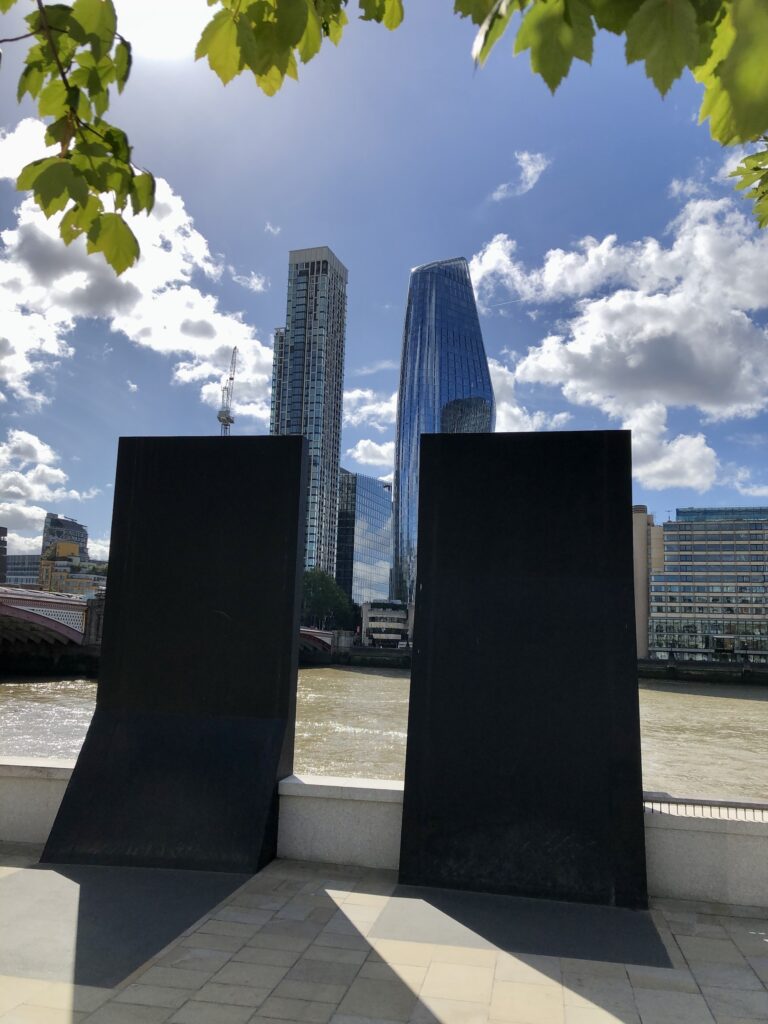
Twins, these two strangely satisfying dark forms by Nathan Coley not only echo some of the buildings on the south bank but even have a physical link with the River Thames, as part of their structure is fixed over the wall and down to the water below.
Glasgow artist Coley was commissioned by Tideway, builders of London’s new *super sewer*, to create sculptures for the newly formed public park, hiding some of the complex operating works beneath, on the banks of the River Thames at Blackfriars. His work, called Stages, is made up of five abstract sculptural forms of which Twins is one, and designed to reflect Sir Joseph Bazalgette’s pioneering engineering of the past and Tideway’s skilled engineering of the present. Together these sculptures offer a new way of looking at this stretch of the river “with boats passing along it, and bridges and buildings along its banks.”
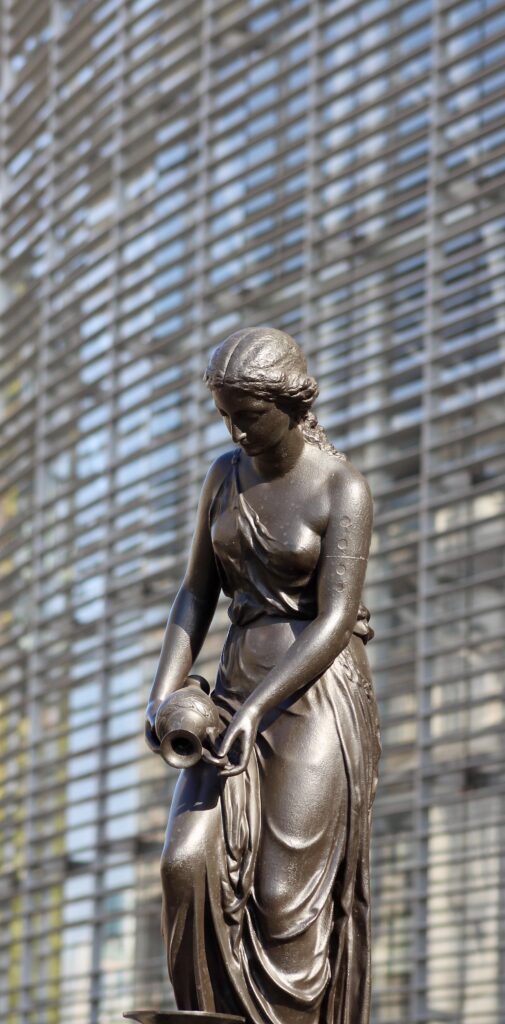
The thoughtful looking girl portrayed on the Grade II listed Temperance Drinking Fountain close to Blackfriars underground station, was designed by Wills Brothers and cast in bronze by the Coalbrookdale Company in Shropshire. Described as “A Samaritan woman at a well”, she was originally presented to the Royal Exchange in 1861 by Member of Parliament, Samuel Gurney. Together with philanthropist, barrister Edward Thomas Wakefield, they had set up The Metropolitan Drinking Fountain and Cattle Trough Association, whose aim was “to provide free, clean municipal water as a safe, sober alternative to public houses and alcohol.
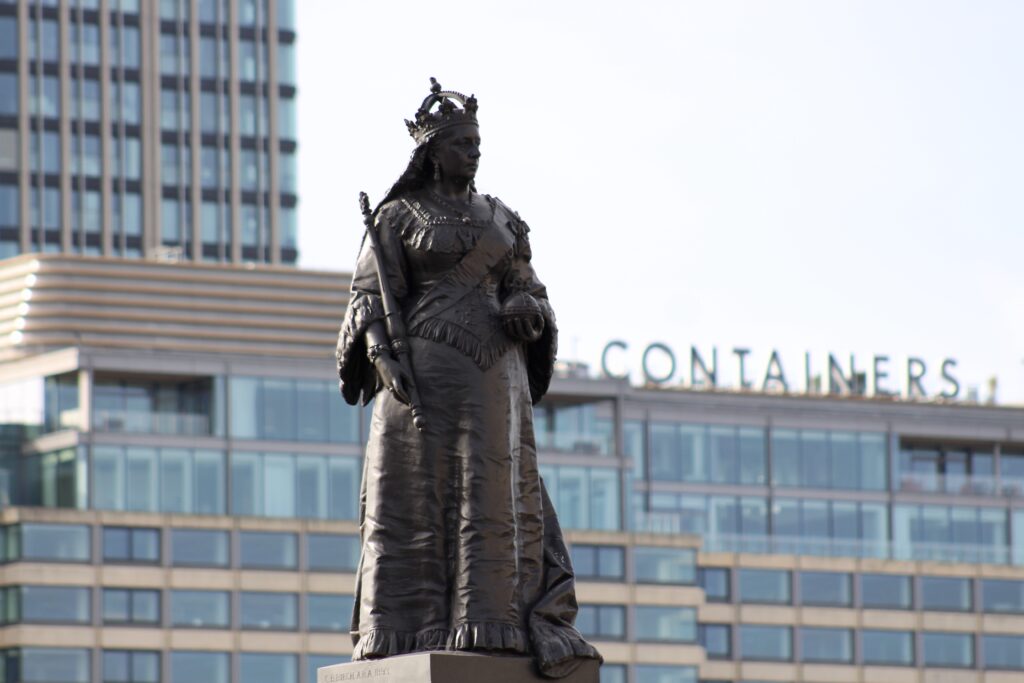
The statue of Queen Victoria was sculpted by Charles Bell Birch, Associate of the Royal Academy. Both her statue and the sculpture of the Temperance Drinking fountain in the image above, were removed by conservation specialists Rupert Harris Conservation during the redevelopment of Blackfriars railway station and carefully restored. They are now back in situ.
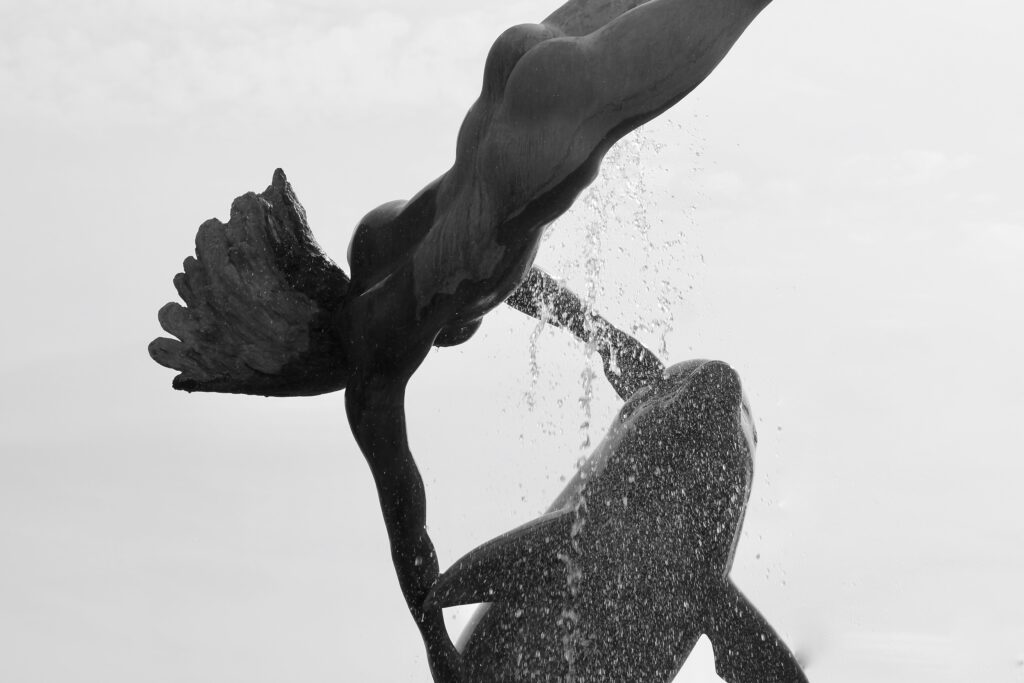
My favourite statue by the river: Girl with a Dolphin by David Wynne, created in bronze, 1973. An entrancing expression of freedom, joy, and movement…
Note
I have added a few notes to each photograph in case you would like to find out more.